Cam-Lidar
Cameras, lidar and AI fused in one sensor head. It detects, classifies and tracks small, fast aerial targets in 3D, by day or night.
- Lidar + camera fusion
- Built for targets at 75 mph
Electromagnetic launch · Alameda, California
We build electromagnetic launchers. Today they pull hostile drones out of the sky, intact. Next, they put payloads in orbit.
Every rocket carries its own fuel, burned once and gone. We replace it with electricity that stays on the ground, in a launcher built to fire again and again.
Technology
Capacitor banks charge between shots. Nothing burns, and nothing on board is volatile.
Coils fire one after another, 288 in all. The coil ahead pulls the projectile in; the coil behind, with its current reversed, pushes it out.
Past the last coil, the projectile leaves the muzzle with no flame and no smoke, and the bank recharges for the next shot.
Defense · Drone Catching System
The Drone Catching System fires net rounds from an electromagnetic launcher, up to five a second. Cam-Lidar finds the target, an operator authorizes every shot, and the drone comes down in one piece.
Cameras, lidar and AI fused in one sensor head. It detects, classifies and tracks small, fast aerial targets in 3D, by day or night.
Capacitors discharge through the coils in sequence and throw a net round at about Mach 1. No propellant, no explosive charge.
The launcher and Cam-Lidar mount as one unit, on a fixed site or on the move. Put it where the threat is.
For defense, security and critical-infrastructure teams
Talk to us about the DCSFirst intercept
Our first live engagement: one drone, one net round, nothing left in pieces. Below is an illustrated replay of the sequence.
Full footage premieres at CES 2027
Second generation
Our second-generation launcher goes on show in Las Vegas in January. Before that, it goes to the test stand, and the footage goes here.
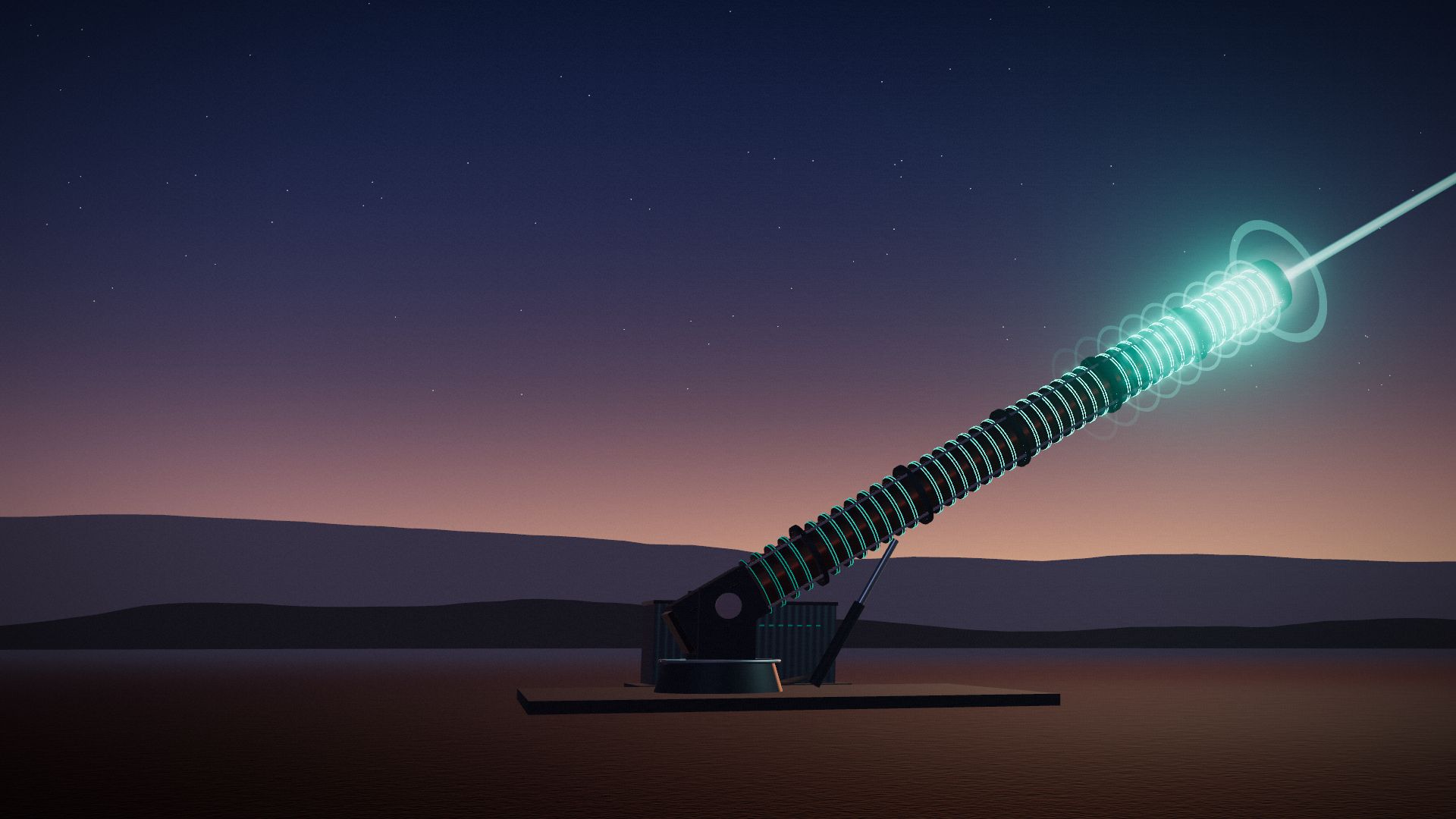
Space launch · MEL
MEL, magnetic-electric launch, takes the coil architecture that throws a net round and scales it toward space. The energy comes from the grid, not from a tank. The launcher stays on the ground, ready to fire again.
Vision
Rockets are spectacular because they are rare. We want launch to be frequent, clean and affordable: powered from the grid and repeated on demand.
We start on the ground, catching drones. We finish in orbit.
Energy stays on the ground. Nothing burns and nothing is thrown away.
Threats come down whole, with no debris and no collateral damage.
Machines detect and track. A human authorizes every shot.
A launcher is measured by how often it flies, not by how loud.
CES 2027 · Las Vegas
Our second-generation launcher will be on the show floor. Come see it up close, and watch the first intercept footage with us.
Company
Velodyne Space is led by its founder, David Hall. He built the spinning lidar that let the first autonomous vehicles see. Now he’s building launchers that run on electricity.
Meet the team“Cam-Lidar paired with the Velodyne Space electrical-magnetic-launch system is a game changer to defend against the threat of drones.”
David Hall — Founder & CEO
Headquarters
Designed and built in Alameda, California.